
Maria Odília Teixeira in Medicine: journey, challenges, and legacy
Talking about Maria Odília Teixeira in Medicine is revisiting an essential part of the history of healthcare and the fight for equality in Brazil.
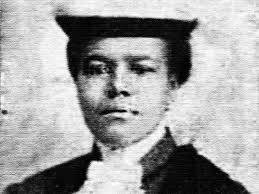
Talking about Maria Odília Teixeira in Medicine is to revisit an essential part of the history of healthcare and the struggle for equality in Brazil.
In a country still deeply marked by slavery and racism, she broke barriers of gender, race, and class to become the first Black woman physician registered in Brazilian history, graduating in 1909 from the prestigious Bahia School of Medicine.
More than just a name in history books, Maria Odília is a symbol of resistance, representation, and Black protagonism in a space historically reserved for white men from elite backgrounds.
By learning about her journey, it is possible to better understand the challenges faced by Black women in higher education, the impact of her professional work, and the legacy that Maria Odília Teixeira in Medicine continues to leave for new generations.
Who was Maria Odília Teixeira
Origins, family, and historical context
Maria Odília Teixeira was born on March 5, 1884, in the city of São Félix, in the Recôncavo region of Bahia, an area marked by sugar and tobacco economies and by intense slave-based relations until the late 19th century.
She was the daughter of a white physician, José Pereira Teixeira, and Josephina Luiza Palma, a Black woman whose mother had been enslaved and later freed.
This background placed her in a unique position: while she had access to certain educational resources through her family, she also faced racial and gender stigma in a Brazil that had only recently abolished slavery — the Lei Áurea had been enacted just over 20 years before she graduated.
At the age of 13, Maria Odília left São Félix and moved to Salvador to study at Ginásio da Bahia, a school attended by young men from elite families. There, she graduated in Sciences and Letters, studying subjects such as French, Greek, and Latin — something extremely rare for a young Black woman at that time.
Admission to Medical School
In 1904, Maria Odília enrolled in the Bahia School of Medicine (FMB), one of the most prestigious medical institutions in the country.
She received support from her brother Joaquim Pereira Teixeira, who acted as a mentor, helping her adapt to an environment dominated by white men.
Her presence alone was already a political act: in a class of 48 students, Maria Odília was the only woman and the only Black student, highlighting the magnitude of her pioneering role.
On December 15, 1909, she graduated as a physician, becoming the first Black woman doctor in Brazil and the seventh woman to graduate in Medicine from the institution, as well as the first woman to earn a medical degree there in the 20th century.
The journey of Maria Odília Teixeira in Medicine
Her thesis and choice of topic
To complete her degree, Maria Odília presented the thesis titled “Some considerations on the curability and treatment of alcoholic cirrhosis”, a topic related to internal medicine and hepatology.
This choice broke with the norms of the time, when the few women in medicine typically focused on “feminine” areas such as gynecology and pediatrics.
By addressing alcoholic cirrhosis, Maria Odília challenged both gender prejudice and scientific racism that associated diseases like alcoholism with supposed “defects” of Black people.
Thus, from the beginning of her career, Maria Odília Teixeira in Medicine established herself as a professional who challenged stereotypes and questioned racist interpretations of science.
Beginning of her medical practice
After graduating, Maria Odília returned to the Recôncavo region, especially to the cities of Cachoeira and São Félix, where she began practicing medicine.
Early in her career, many of her consultations were conducted under the supervision of her father or other male physicians, reflecting societal distrust toward a Black woman practicing medicine.
Over time, however, she began practicing independently, building a patient base composed largely of women. This connection, especially with poorer women, gave her work a strong social impact, providing care to patients who were often overlooked or mistreated by the healthcare system.
The first Black female professor at the Bahia School of Medicine
Five years after graduating, in 1914, Maria Odília was invited to return to the Bahia School of Medicine to serve as a professor of Obstetric Clinic.
She thus became the first Black female professor at the institution, an extremely significant achievement in a highly elitist academic environment.
Her presence in academia demonstrated not only her technical competence but also her ability to occupy spaces of power and intellectual influence in a society that largely did not recognize Black women as producers of knowledge.
In 1917, however, she left teaching to care for her father, whose health had declined. The family moved first to Cachoeira and then to Irará, in the interior of Bahia.
Challenges faced by Maria Odília Teixeira in Medicine
Racism, sexism, and academic elitism
To understand the magnitude of Maria Odília’s achievements, it is important to consider the context: she studied and graduated in a Brazil where women could not vote and Black people — especially Black women — were systematically excluded from spaces of power and intellectual formation.
At the Bahia School of Medicine, she navigated a masculinized, elitist academic environment dominated by white men. Her condition as a Black woman placed her in a position of multiple vulnerabilities.
Even with strong family support, she still faced prejudice, distrust, and symbolic barriers that attempted to limit her progress.
The impact of Maria Odília Teixeira on Brazilian medicine
Representation and inspiration for Black women
The main impact of Maria Odília Teixeira in Medicine is both symbolic and structural: she became a landmark of representation in a field where Black people remain underrepresented.
In a country where the majority of the population is Black but most physicians are still white, her trajectory continues to serve as inspiration.
Her story shows that Black women have always been present in knowledge production, healthcare, and academic life, even when official records attempted to erase them.
The life and work of Maria Odília Teixeira in Medicine represent a milestone of courage and pioneering in a deeply exclusionary context. A Black woman from the Recôncavo region of Bahia, she challenged the limits imposed by a racist and patriarchal society, graduated as a physician in 1909, became a professor, and paved the way for other Black women to dream of — and achieve — a career in healthcare.
Her legacy goes beyond biography. It influences how we think about medicine, education, and social justice in Brazil. By recovering and sharing her story, we contribute to repairing historical erasures and inspiring new generations of students who, like Maria Odília, seek to transform realities through medicine.