Love according to Medicine: what happens in the brain when we are in love?
Do your hands get sweaty, your heart race, and your thoughts keep returning to the same person? It may feel like magic—but it’s not: love is also a biological response in our body. And medical science has a lot to say about it. This Valentine’s Day, how about understanding how love works inside your brain? […]
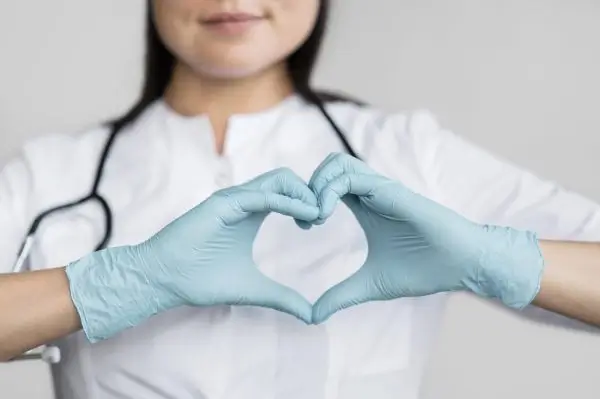
Do your hands get sweaty, your heart race, and your thoughts keep returning to the same person? It may feel like magic—but it’s not: love is also a biological response in our body. And medical science has a lot to say about it.
This Valentine’s Day, how about understanding how love works inside your brain?
Contrary to what many think, passion is more chemistry than poetry. It involves a series of neurochemical substances that transform our behavior, mood, and even the way we perceive the world. Let’s meet the main players in this story.
💘 Dopamine: the fuel of passion
Dopamine is a neurotransmitter associated with pleasure and reward. When we are in love, it is released in large amounts, especially in areas of the brain such as the nucleus accumbens, the same region activated when we eat chocolate or listen to a song we love.
This substance gives us that feeling of euphoria, enthusiasm, and energy. That’s why, at the beginning of a relationship, it’s common to sleep less, eat less, and still feel “on cloud nine.”
👉 The nucleus accumbens is a small but powerful structure located in the center of the brain. It is part of the reward system and is directly involved in dopamine release.
During the early stages of romantic love, neuroimaging studies show that the nucleus accumbens is one of the most active brain regions. When we see, hear, or even think about the person we’re in love with, this area is stimulated, creating that sense of euphoria and well-being often described as “butterflies in the stomach.”
💓 Oxytocin and vasopressin: bonding and attachment
Over time, dopamine gives way to other key players: oxytocin and vasopressin. These hormones are linked to bonding and trust. Oxytocin, for example, is known as the “love hormone” or “cuddle hormone,” as it is released during physical contact, kisses, and even when we hold hands.
These hormones are essential for transforming passion into something more stable, like long-term love. If dopamine is the initial fireworks, oxytocin is the bond that sustains the relationship.
🧠 Prefrontal cortex: love also (dis)organizes
Falling in love also affects the prefrontal cortex, the brain region responsible for rational judgment and decision-making. Studies show that during intense passion, this area may become less active, which explains why we sometimes make impulsive decisions when in love.
Don’t worry—this is a natural and temporary response. Over time, the brain returns to balance, and we learn to experience love more rationally and consciously.
❤️ Passion or disorder?
Interestingly, the brain pattern of romantic passion resembles that of certain obsessive disorders. That’s why repetitive thoughts and the constant desire to be with the loved one can feel almost uncontrollable at the beginning.
The good news is that the brain adapts and returns to normal functioning as the relationship deepens.
🧬 Science confirms: love is also physiological
Functional neuroimaging studies show that people in love activate brain regions similar to those stimulated by addictive substances—meaning love can literally be addictive.
In addition, being in love can bring health benefits: reduced stress, improved immunity, and better mood are some of the advantages observed in healthy relationships.
Why does this matter for medical students?
Understanding the effects of love on the brain is not just interesting—it is essential for future physicians. Human behavior is directly related to physical and mental health.
At UnexMED, students learn from the beginning that caring for health also means understanding emotions, feelings, and human connections. Passion may be chemical, but care is human—and that makes all the difference in medical practice.
✨ This Valentine’s Day…
Take the opportunity to be fascinated by the science behind love—and maybe fall in love with Medicine too.
After all, studying the human body is, in many ways, studying love in all its forms.